

Researchers Share, GRAPHIA Listens: Insights and Actions from our Latest SSH Survey
Authors: Georgia Rubidge and Crystal Silver (photos credit Georgia Rubidge and Crystal Silver)
GRAPHIA is building the first comprehensive Knowledge Graph for Social Sciences and Humanities (SSH), enriched with Artificial Intelligence and Large Language Models (LLMs). By connecting research outputs across disciplines, it aims to streamline research workflows and help break down silos between domains.
Understanding how researchers want to interact with these tools is central to the GRAPHIA’s user-centred design approach. Throughout the project, user feedback informs development through interviews, co-design workshops, and surveys.
Early user interviews explored researchers’ needs and expectations, while later co-design workshops focused on translating these insights into interface concepts. Building on this work, the latest survey investigated how researchers expect to interact with knowledge graph tools in practice.
Surveying the Research Community
GRAPHIA partners launched a survey between 20 November 2025 and 15 January 2026 to explore these questions more broadly across the research community.
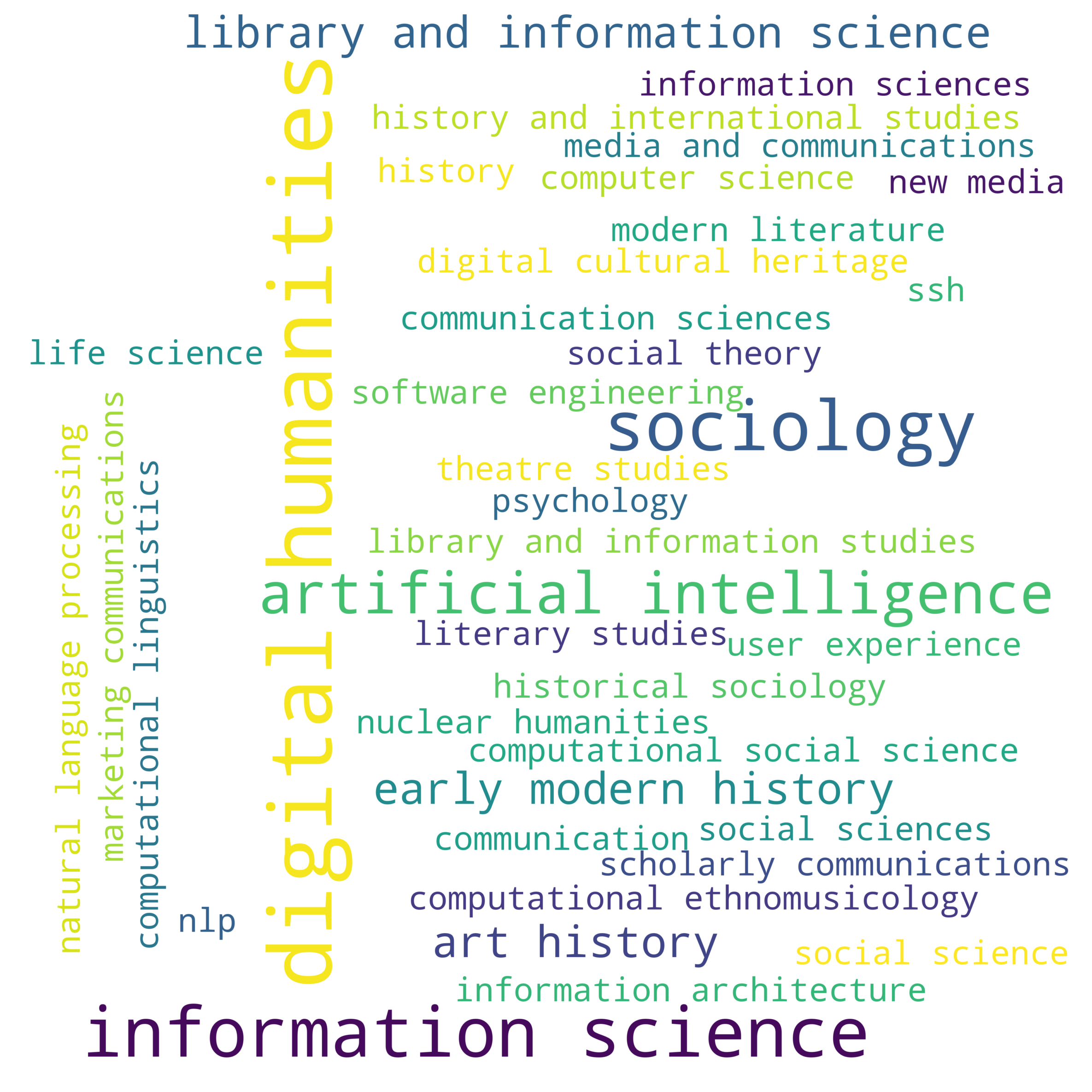
The survey gathered responses from 46 researchers across a wide range of SSH disciplines, including early-career scholars, established academics, and research support professionals. Participants represented fields ranging from sociology and digital humanities to information science and computational social science. These responses provide valuable insights into how knowledge graph tools can best support SSH research workflows.
Key Insights from the Survey
- Researchers bring diverse technical backgrounds and workflows
Participants reported varying familiarity with knowledge graphs, query languages, and digital research tools. For many, these tools are not yet central to their everyday workflows, highlighting the need for accessible and adaptable interface design.
GRAPHIA is exploring different ways to support users with different levels of experience, including training materials, onboarding resources and ensuring the platform remains relevant across a wide range of SSH disciplines.
- Natural language interaction is strongly preferred
The majority of participants favoured interacting with knowledge graphs through a chatbot-style interface. Among those who expressed a clear preference, around 90% selected this option, allowing them to ask questions using natural language rather than specialised query languages such as SPARQL.
GRAPHIA is developing natural language interfaces using LLM-based approaches (as explored in recent work on LLM4SSH), allowing researchers to query and explore the knowledge graph in a more intuitive way.
- Transparency builds trust
Trust in AI-assisted research tools emerged as a key theme. Over 93% of respondents said understanding how a system generates its answers was important, and more than 90% said visible data sources would increase their confidence in results.

These findings reinforce the importance of transparency within GRAPHIA. Ongoing work within the project, including efforts around open data, clearly traceable resources, and FAIR-aligned infrastructure, reflects this commitment to building trust in AI-supported research tools.
Why this matters
These findings highlight key considerations for designing knowledge graph interfaces for SSH research. Intuitive interaction methods, flexible exploration tools, and transparent access to underlying data all play a key role in supporting researcher workflows.
These insights are already informing ongoing work within GRAPHIA, including interface development and training webinars, designed to support researchers in using the platform. Examples of this work, including demonstrations of conversational access to knowledge graphs, are available on the GRAPHIA YouTube channel.
At the same time, the survey results underline the diversity of technical experience within the SSH community, reinforcing the importance of tools that are both powerful and accessible.
Continuing the Co-Design Journey
GRAPHIA’s co-design journey is ongoing. Upcoming activities will include further opportunities for researchers to explore project results and share feedback, including a follow-up online workshop. More details will be shared via our mailing list.
Additionally, GRAPHIA will continue to share updates through social media (follow the project on LinkedIn and Bluesky), webinars, workshops, and future blog posts.